
Early access · Release date: November 13, 2026
UpdatedZombies Aren't Real San Francisco: Safe Zone Strategy Guide
Beat the Zombies Aren't Real San Francisco map with tiny safe zones, broadcast towers, sniper walls, and fire bombs. Learn the setups that save civilians.
Jump to
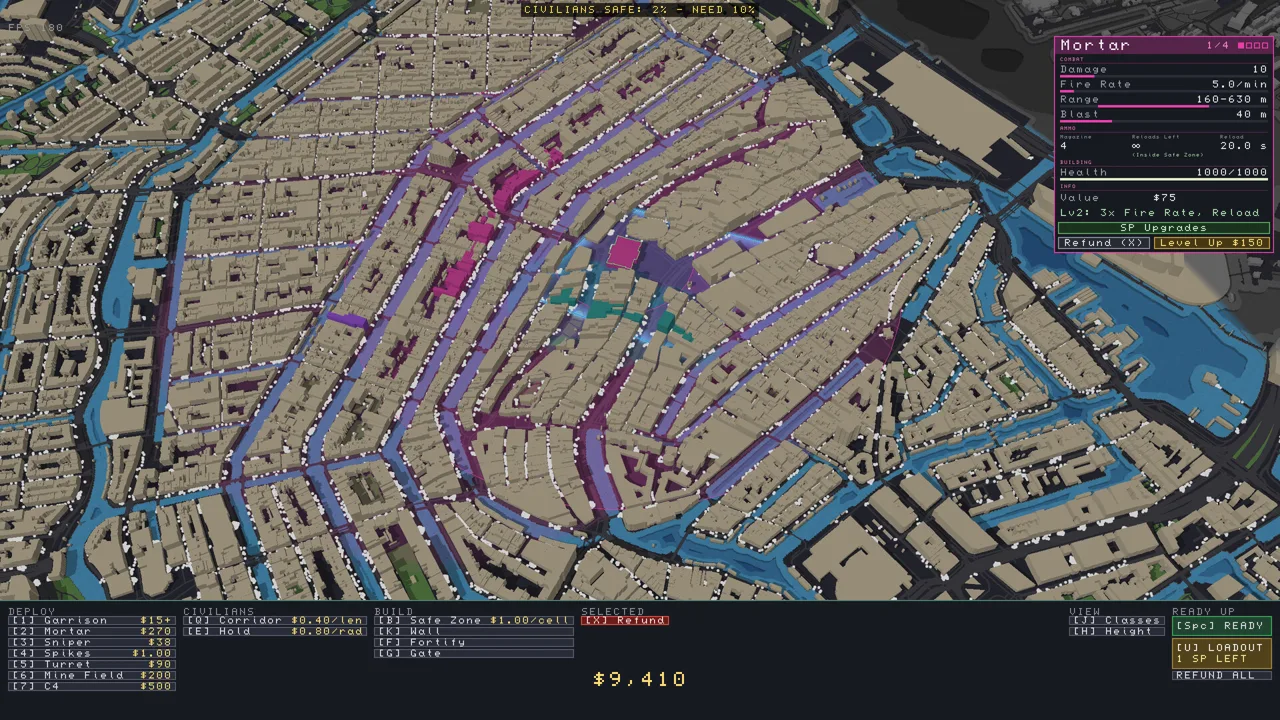
How the San Francisco Map Plays
San Francisco is one of the harder maps, and money is tight from the first stage. A good Zombies Aren't Real San Francisco run comes down to small, surgical safe zones, smart use of civic buildings, and a lot of fire. Every stage adds more ground and more civilians to protect.
The map has one perk you should plan around: fire does more damage and spreads faster. Fire is your friend here, especially in the later stages.
Some basics carry over between stages:
- Each victory expands the playable area, so you need new safe zones to reach new people. You get a limited number of safe zones, but you can also enlarge an existing one.
- Some stages only ask you to save a small share of the population. One mid-campaign stage needs just 4%, so a collapsed base doesn't automatically mean a loss.
- Restarting is part of the game. When a wall falls because a corridor had no turret coverage, retry, move the piece, and run it again.
Zombies Aren't Real launched in Early Access on Steam on Nov 13, 2026, from Jogamedev. You can grab it on the Zombies Aren't Real Steam page.
Reading the Map Before You Spend a Dollar
Scout the map during planning before you place anything. Three controls do most of the work:
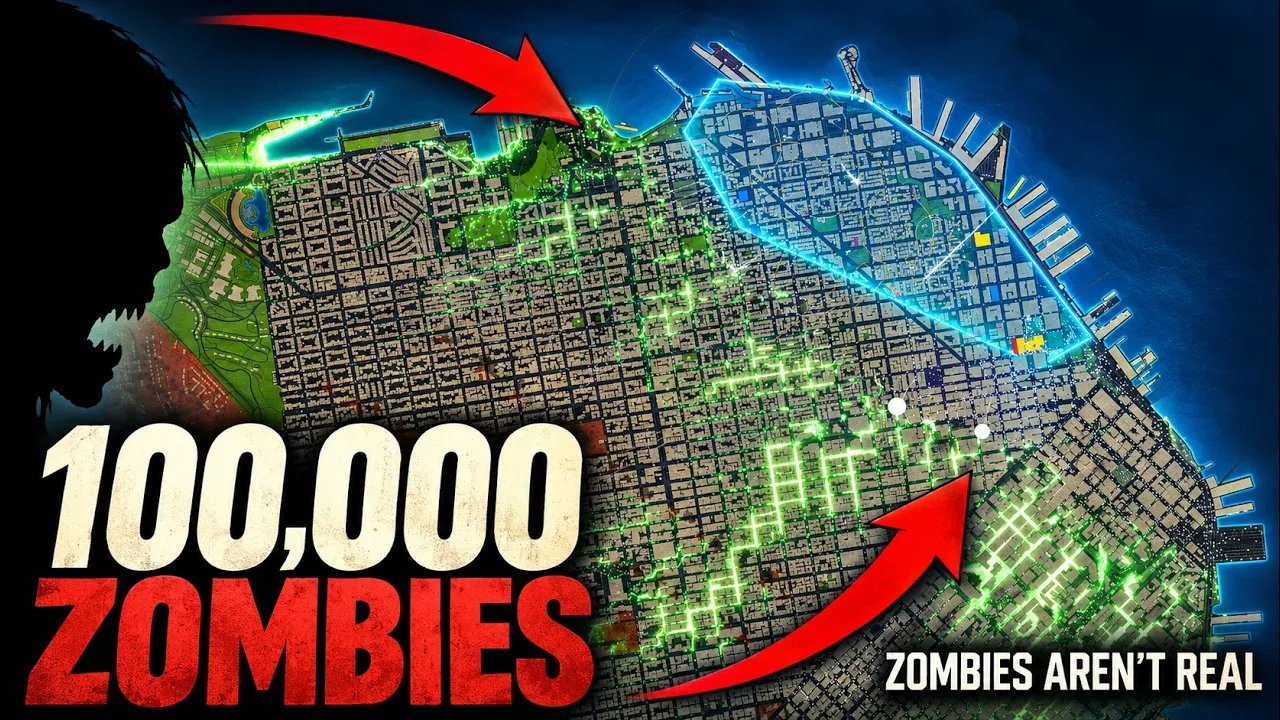
- Alt + middle mouse lets you look around and inspect the city.
- C highlights special buildings you can take, including civic buildings and evacuation points. It is also the easiest view for checking your placed defenses.
- V shows building height. Dark blue buildings are the tall ones, and height matters for mortars because a higher mortar reaches farther.
Look for a cluster that combines a civic building, one or two tall buildings for mortars, and some large buildings for garrisons. Big buildings give garrisons a much wider radius than small ones. Small buildings have poor garrison coverage, but they make good sniper perches.
Evacuation buildings show up green. These pull civilians out of the zone over time, so a base built around one keeps saving people even if the walls eventually fall.
Civic Building Specializations
Civic buildings such as police stations, colleges, and other government buildings can be converted into one of several specializations. Other special buildings, like a hotel or an ATM, offer a budget or repair bonus instead. These choices shape your whole defense.
| Specialization | What it does |
|---|---|
| Police | Spawns an officer every 2 seconds, up to 100. Officers in its radius survive their first bite |
| Militia | If the walls are breached, 35% of the civilians inside come out armed |
| Broadcast | Calls civilians in its radius into the zone at a run, at 90% of zombie speed |
| Radio Tower | Units and buildings in its radius reach 50% farther, plus 25% for each overlapping tower |
| Budget | Units cost 20% less |
| Repair | Walls heal 40 HP per second |
| Evacuation (green) | Takes five civilians out of the zone every second |
Here is how to get the most from each one:
- Broadcast is the backbone of most bases. It saves you from paying for corridors in the opening, and it overrides the civilians' habit of bouncing off walls. To stretch it further, run a corridor only into the edge of the broadcast radius and let the broadcast pull people the rest of the way.
- Switch police officers from Guard to Pursue. They spread out and push into the horde instead of standing still. When you judge police by their kills, read the total kill stat, not the per-unit figure. On total kills, police can outscore snipers.
- Radio Tower turns mortars into artillery. One tower can push mortar and garrison reach several rows of buildings farther. Put it where your mortars and garrisons already cluster.
- Pair evacuation with Repair. On a zone built to evacuate, healing walls buy the seconds that the evacuation needs.
- Militia works as a trap. A broadcast zone feeding a militia zone can flood the streets with armed civilians when it breaks. It is expensive, though. One costly trap base ate money that could have bought another howitzer, and it did less than expected.
Building a Small Safe Zone That Holds
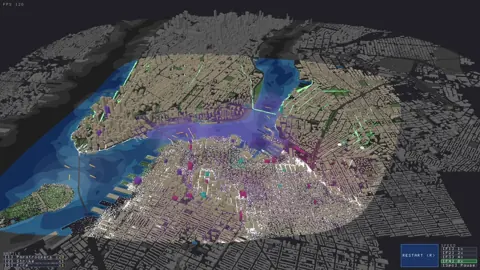
Keep your safe zones small. Big bases are expensive to wall, garrison, and upgrade, and they get messy to defend. A compact block with the right buildings protects plenty of people, and you can always expand later. Expanding costs extra, especially if you have already upgraded the zone.
 Image: Steam / Jogamedev
- Wrap the zone around a civic building and at least one tall building. If a great mortar spot sits just outside your line, it is often worth bending the wall to include it.
- Build walls into buildings. Zombies bounce off structures, so using buildings as part of the perimeter creates natural bottlenecks.
- Add gates, but don't overdo it. Without gates, civilians can't get in and won't respond to a broadcast. With a broadcast running, they find the gates on their own, so you need fewer than you might think.
- Wall in a whole block. Zombies don't spawn inside a safe zone.
- Upgrade before you expand. A small zone is cheap to upgrade, and upgrades scale hard. Leveling a mortar raises its damage from 10 to 30.
Since Update #1 (v0.43.1), released November 16, 2026, evac corridors cost a $30 start fee plus a price based on the area they cover. A wider corridor now costs more, so you can't widen them for free anymore. A narrow corridor got much cheaper, though: a 300 m corridor at default width dropped from $120 to about $60. Evac holds got more expensive in the same update. The patch also made civilians smarter. Corridors now lead people along streets around buildings and through a gate at the end, and calm civilians near a gate walk in on their own.
Watch your bridges. Civilians can struggle to cross some of them, and a suspension bridge's pylons can count as buildings that block the path. If people pile up at a bridge, move the gate to the side of the zone that faces the landmass. Since v0.43.1, a toppled building damages any bridge it falls onto, and if the bridge collapses, everyone on it drowns.
Defenses: What to Place and Where
Garrisons
Garrisons inside a safe zone reload when they run out of magazines, so their ammo is effectively infinite. Each reload stops them firing for 6 seconds, which can decide a wall. Upgrade garrisons for more magazines and fewer reload gaps. Favor the larger buildings for their radius. One well-placed big garrison can cover three directions.
Snipers
Snipers are cheap, and upgraded snipers are excellent. An upgrade brings damage to 80 and stretches their range across a large chunk of the city. Hold left mouse to angle each one. Aim them down your corridors and the streets zombies are likely to use, and put them on small buildings around the edge. A ring of upgraded snipers covering 360 degrees will clean the streets.
Mortars
Put mortars on the tallest buildings in your zone. Check with V. Mortars, the battleship, the tank, the helicopter, mines, and burning oil no longer kill civilians or damage safe zone walls since v0.43.1, so you can let them fire freely near your own people.
Turrets
Turrets hit hard, but they never reload, even inside a safe zone. Once they're empty, they're done. Place them at the choke points your walls create and upgrade the ones that see the most action. Put a turret on each corridor leading to your walls so no sector is left uncovered.
Howitzers and the Battleship
Once you unlock it, the howitzer covers almost the entire map, but it can't hit targets close to itself. A second howitzer placed elsewhere covers that blind spot, and two together can thin out entire hordes. The battleship is one of the strongest units in the game, but San Francisco has little water to place it in. Drop it in an inland pond or lake between two of your zones so it can defend both. Howitzers get more expensive each time you buy one.
Loadouts, Air Support, and Fire
Loadout cards are your emergency tools once the battle starts. Pause right after hitting Ready, find where the outbreak is spreading, and react.
- Paratroopers: Use these after a bad start. Drop them in a ring around a fresh outbreak to contain it before it reaches civilians heading to your gates.
- Helicopter: This is the best all-rounder for thinning a horde before it hits your walls. Keep one in reserve, because you never know which way the horde will turn.
- APC: This one hits very hard. Send it into a dense pack of zombies.
- Fire bomb: Aim at forests and green areas, and box hordes in between two burns. Zombies that walk into the flames die. Thanks to the San Francisco perk, a well-placed burn becomes a firewall that keeps a whole wave off your perimeter. Fire bombs can rack up more kills than any other weapon in a stage. Remember that aimed attacks like fire bombs, airstrikes, and cluster bombs still hurt civilians and walls.
- Security Bus and Medivac: Since v0.43.1, both arrive faster after Ready. The Medivac now runs itself and ferries civilians to the nearest safe zone.
Watch for zombies gathering in a vortex. That's where they mutate into special zombies, and those need extra firepower.
Later Stages: Expanding Across the City
As the map grows, you can't save everyone. Pick your battles.
- Build on what already works. Copy a proven setup in each new area: broadcast, evacuation, Repair or Budget, garrisons in big buildings, mortars up high, and a sniper ring.
- Keep zones close together. Bases in a tight row are easier to support with one set of howitzers and loadout cards.
- Sell what isn't pulling its weight. At the start of each stage, refund units that underperformed and move the money into turret and howitzer upgrades.
- Write off doomed areas early. Spend your paratroopers and fire on outbreaks you can actually contain, not on districts that were lost from the first second.
FAQ
Can I play San Francisco in co-op?
Yes. The game supports online co-op with one friend. Since v0.43.1, each player can only place gates in their own walls, and a wall the two zones share accepts a gate from either player.
Is there a Mac version?
There's a beta. In your Steam library, right-click the game, open Properties, go to Game Versions & Betas, and choose "test-mac-version". It's less tested than the Windows build.
Why won't civilians enter my safe zone?
Check your gates first. Without a gate, civilians can't get in and ignore broadcasts. If they're stuck at a bridge, move the gate toward the landmass side, or check whether pylons on the bridge are blocking the path.
Continue with
 Zombies Aren't Real Venice Guide: Bridges, Bases and TipsBeat the Zombies Aren't Real Venice campaign with smart safe zones, bridge choke points, mortar setups and air support picks for each of its four levels.
More in Maps
Zombies Aren't Real Austin Map: How to Defend the City
Defend Texas in the Zombies Aren't Real Austin Workshop map. Learn safe zone placement, sniper towers, bridge air strikes and how to survive later levels.
Zombies Aren't Real Berlin Guide: Safe Zones, Nukes & Traps
Survive Zombies Aren't Real Berlin with safe zone layouts, militia traps, nuke and battleship timing, and the v0.43.1 changes that matter most on this map.
Zombies Aren't Real Boston Guide: Beat All 5 Levels
Clear the Zombies Aren't Real Boston campaign with level-by-level safe zone setups, bridge choke points, paratrooper drops and the big Update #1 changes.
Zombies Aren't Real Chicago Map Guide: Save More Civilians
Defend the Zombies Aren't Real Chicago campaign with smarter safe zones, gates, bridge control and the Update #1 changes. Learn how to save more civilians.
Continue exploring
Zombies Aren't Real Maps: Campaign Cities & Workshop Guide
Explore Zombies Aren't Real maps, from Boston's five levels to Venice and San Francisco, plus Workshop cities, the map editor, and tips for every layout.
Zombies Aren't Real Miami Guide: How to Beat All 5 Levels
Beat all five levels of Zombies Aren't Real Miami with wall-and-paratrooper chokepoints, the police-station militia combo, and bridge defense tactics.
Join the community
Official channels for news, updates and player help: